Career Progression
In blockchain, career progression moves faster than traditional industries. A junior smart contract developer can reach senior in 2–3 years (vs 5–7 in traditional tech). The trade-off? You need to learn continuously — protocols evolve quarterly, not annually.
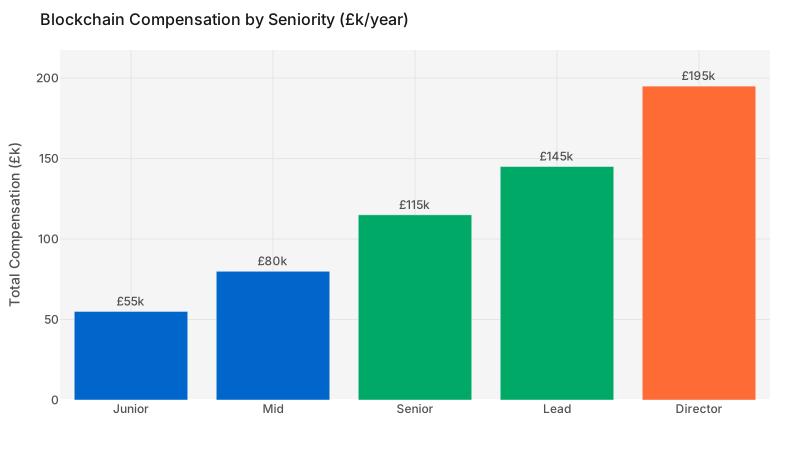
Career Levels and Compensation Bands
Blockchain compensation structures vary significantly by role type, protocol stage, and location. The figures below represent base salary ranges for fully remote, international positions. Total compensation including token grants typically exceeds base salary by 50–200%.
Junior
0–2 years experience
Entry-level roles with direct mentorship. Focus on learning protocols, contributing to well-defined tasks, and building foundational skills under guidance.
Mid-Level
2–4 years experience
Independent contributors who own complete features or analysis workstreams. Beginning to mentor juniors and influence technical decisions.
Senior
4–7 years experience
Deep technical experts who drive significant protocol decisions, lead complex projects, and set standards across their discipline.
Lead / Principal
7+ years experience
Organisational-level impact. Define the technical and strategic direction for entire teams or protocols. Typically manage other senior engineers or analysts.
Director / VP
10+ years experience
Executive leadership responsible for entire departments or protocol foundations. Accountable to the DAO or board for strategic outcomes.
Compensation Structure
Blockchain compensation differs fundamentally from traditional tech. Base salary is comparable, but token grants, governance rights, and performance incentives create a total compensation structure that can significantly exceed traditional equivalents — especially during bull markets.
Base Salary
40–60% of total comp
Paid in fiat (USD/GBP/EUR) or stablecoins (USDC/USDT). Comparable to or above traditional tech industry rates at the same seniority.
Token Grants
30–50% of total comp
Protocol governance tokens vesting over 4 years with a 1-year cliff. Can represent 50–200% of annual base salary depending on protocol stage and token price.
Governance Rights
Non-monetary benefit
Token holders vote on protocol upgrades, treasury allocations, and strategic decisions. Participation in governance is both a right and a professional expectation.
Performance Bonuses
0–15% of total comp
Quarterly or annual bonuses in stablecoins tied to individual and protocol performance metrics. Less common than in traditional finance.
Web2 RSUs vs Web3 Token Grants
Traditional tech RSUs vest into established company equity with predictable dilution and a clear path to liquidity via IPO or acquisition. Web3 token grants vest into governance tokens with volatile prices, potential for significant upside in bull markets, and counterparty risk tied to protocol survival. Savvy blockchain professionals treat token compensation as asymmetric upside and plan financially around base salary and stablecoin bonuses only.
Skills at Each Level
Progression in blockchain rewards specialisation at senior levels whilst requiring breadth at junior levels. The management path is less defined than in traditional tech — many highly compensated principals remain individual contributors throughout their careers.
| Level | Technical Depth | Leadership | Specialisation |
|---|---|---|---|
| Junior | Protocol user and reader. Executes defined tasks with guidance. | Self-management only. Asks questions effectively. | Broad exposure to multiple areas without deep expertise. |
| Mid-Level | Protocol contributor. Independent problem-solving within understood domains. | Mentors juniors informally. Beginning to influence peers. | Developing depth in 1–2 areas whilst maintaining breadth. |
| Senior | Protocol expert. Designs complex systems and evaluates architectural trade-offs. | Formal mentorship. Influences technical standards across teams. | Deep expertise in a specific path: security, MEV, ZK proofs, or infrastructure. |
| Lead / Principal | Protocol architect. Sets technical direction and evaluates novel approaches. | Manages other senior contributors. Builds and grows teams. | World-class expertise in a domain. Sought externally as an expert. |
High-Value Specialisations (2026)
Accelerating Your Growth
In blockchain, public reputation accelerates career progression more than it does in any traditional industry. The open-source, transparent nature of the ecosystem means your contributions are permanently visible and directly attributable to you.
Open Source Contributions
High ImpactContribute to major protocol codebases such as Uniswap, Aave, Compound, or Ethereum core clients. Even documentation improvements demonstrate engagement and build visible reputation.
Hackathon Participation
High ImpactETHGlobal, ETHDenver, and Devcon hackathons provide concentrated learning, networking, and direct employment opportunities. Many senior engineers started through hackathon projects.
Protocol Governance
Medium ImpactActive participation in governance forums for Compound, Aave, and Uniswap demonstrates engagement. Quality contributions on complex proposals lead to recognition and direct opportunities.
Writing and Speaking
High ImpactPublished technical analyses, protocol post-mortems, or conference talks build reputation far beyond internal work. Thought leadership compounds over time and attracts inbound opportunities.
“In traditional industries, your reputation follows your CV. In blockchain, your reputation precedes it. What you've built on-chain, what you've written publicly, what governance proposals you've contributed to — these signals reach hiring managers before you do.”
Key Takeaways
Blockchain career progression moves 2–3x faster than traditional tech — junior to senior in 2–3 years versus 5–7, driven by talent scarcity.
Total compensation at senior levels regularly exceeds £200,000 when including token grants — but token volatility means base salary should anchor financial planning.
Specialisation in high-demand areas (ZK proofs, MEV, formal verification, cross-chain infrastructure) commands a significant premium over generalist roles.
The management path is less defined than in traditional industries — many senior engineers achieve principal status as individual contributors without managing people.
Continuous learning is not optional: protocols evolve quarterly and new primitives emerge regularly. Those who stop learning fall behind within 12–18 months.